I work in the Bitcoin industry, but there is still no clear source of revenue. This is not only my situation. In Korea, almost no one is sustainably earning money through Bitcoin-related work outside of donations. Even so, people keep doing this work. Why do they hold on to something that barely makes money?
From the outside, everyone looks similar. They want to contribute to Bitcoin. They want more people to understand Bitcoin. They want a Bitcoin standard to arrive. But after watching closely for several months, I learned that the visible posture and the actual motivation are not always the same.
Some people were deeply sincere about Bitcoin, but their direction shifted while trying to use it as a business. Some believe Bitcoin is the superior money and are planting a flag while waiting for the market to grow. Some want to build better financial services with Bitcoin. Some believe the current economic system is already breaking down and want to build a different world through Bitcoin.
On the surface they may all look alike, but their motives and priorities are different. Those differences eventually reveal what kind of future each person wants for Bitcoin.
A Bitcoin standard may require everyone's effort. For a Bitcoin standard to arrive, the market must grow. More people need to join, products need to be built, and services need to appear. There must be people who explain Bitcoin, people who try to sell it, and people who bring it into daily life.
But I am not satisfied with simply making the Bitcoin market bigger.As written in the Bitcoin white paper, I want it to work as electronic cash without trusted third parties. I want Bitcoin to break the distorted existing economic order and help everyone live on a better financial foundation.
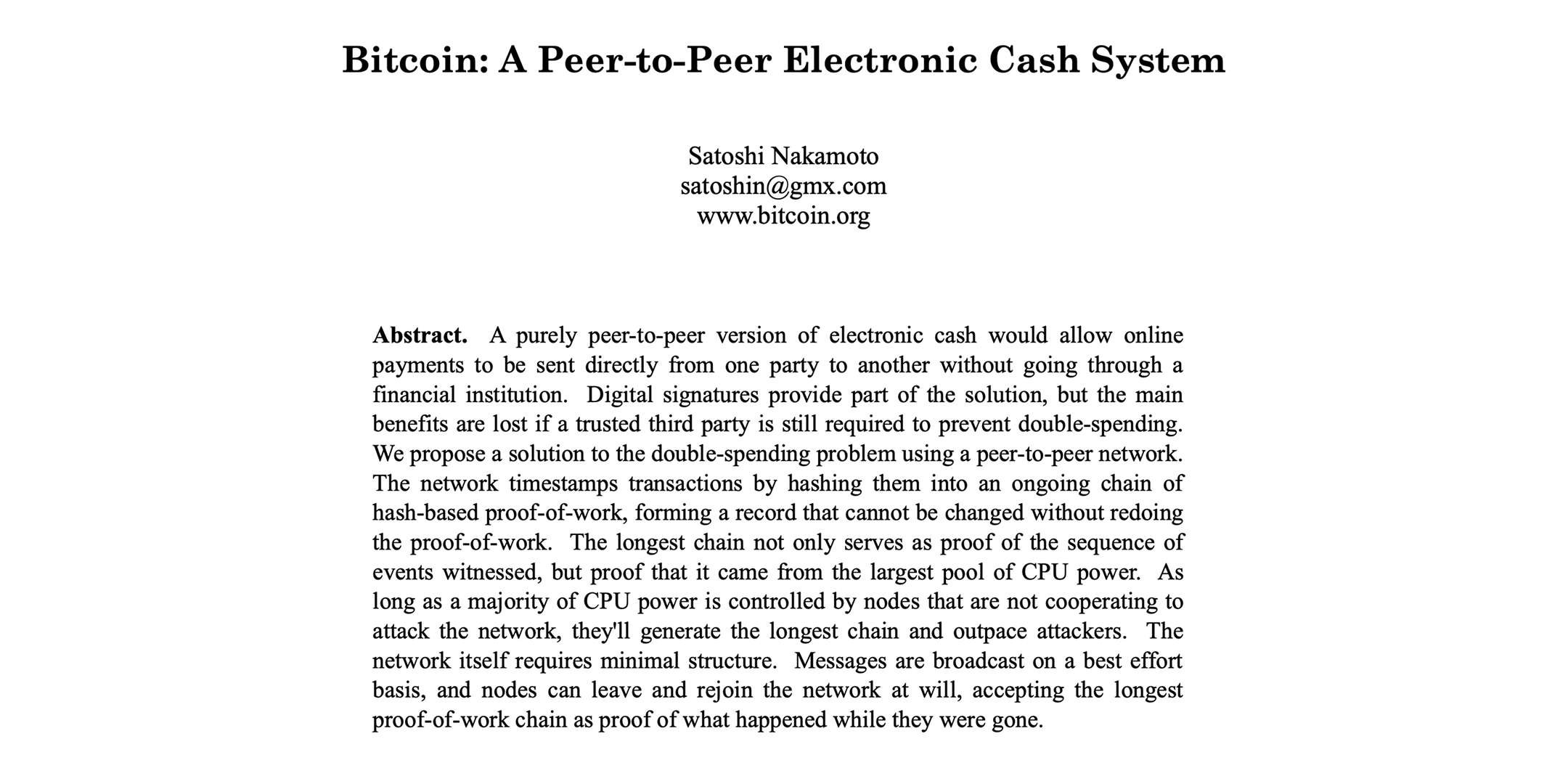
For that to happen, the requirements described in the Bitcoin white paper need to be preserved.
- Removing trusted third parties
- Being able to verify directly instead of trusting someone
- Being able to join the network without anyone's permission
But these are protocol-level designs, and there is a large gap between them and how Bitcoin is handled in the real world. Can everyone perfectly verify transactions or devices without trusting others? Can everyone self-custody without help? Can everyone run a full node or miner and participate in the network?
In the end, there are still moments where some form of trust becomes necessary, and a perfectly trustless system is an illusion. The best we can do is reduce trust as much as possible and lower risk by avoiding single points of failure. The problem is that people do not think about this deeply enough. This point is subtle, so it is hard to say exactly what the problem and answer are.
There is an even more fundamental problem. The way Bitcoin's spirit breaks down is not always obvious. Some things, such as altcoins or Web3, are easy to draw a line around. But in reality, many cases are more ambiguous.
Leaving Bitcoin on an exchange
Getting Bitcoin information only from centralized platforms
Treating Bitcoin only as a dollar-cost averaging investment asset
Being exposed only to Bitcoin's price increase rather than using it as money
It is hard to say all of these are bad. Exchanges can be necessary for beginners. Dollar-cost averaging can be a good way to first encounter Bitcoin. Centralized content can also be the starting point for someone's study. It is also true that convenient services are needed for more people to enter Bitcoin.
The problem is when those things become the final state rather than the entrance. Buying Bitcoin on an exchange can be a start. But if it stays on the exchange forever, the person is closer to being exposed to the Bitcoin price than actually holding Bitcoin. Watching Bitcoin content can be a start. But if someone depends only on a person or platform's interpretation, they are trusting an explanation rather than verifying Bitcoin. Dollar-cost averaging can also be a start. But if Bitcoin is seen only as an asset that goes up, it is consumed as another financial product rather than a new form of money.
That is why it is not enough for Bitcoin simply to grow. Bitcoin may spread as its price rises, but it can still lose in how it is used. This is the hardest part. Bitcoin's supply is limited, so it may naturally draw attention as an asset over time. But being noticed as an asset and being used as money are different things.
For Bitcoin to become real money, it has to move beyond the asset stage and into everyday life and transactions. There are many obstacles. People still leave Bitcoin on exchanges. Using a wallet directly is hard. The Lightning Network is still unfamiliar, and the payment experience is not yet smooth. Above all, for most people Bitcoin is still closer to an investment product than money.
That is why turning Bitcoin into a business contains a contradiction from the beginning. Bitcoin was created to reduce intermediaries, while businesses usually earn money through intermediation and services. Bitcoin speaks of self-sovereignty, while the public wants convenient services.